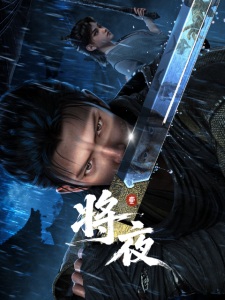
Among the growing wave of high-budget Chinese fantasy animation, Ever Night (将夜) arrives with unusual confidence. Adapted from the celebrated novel by Mao Ni, the series attempts something far more ambitious than a standard cultivation adventure. Instead of relying purely on spectacle, it builds a slow-burning world filled with philosophy, political tension, emotional tragedy, and one of the strongest companion relationships in modern donghua.
At first glance, the series appears to follow a familiar formula: a mysterious young man enters a dangerous world while hiding a dark past. But Ever Night quickly reveals itself to be deeper and more literary than most fantasy action series. Its strength lies not only in battles or power systems, but in atmosphere, character psychology, and the looming sense that fate itself is moving toward catastrophe.
The 2026 animated adaptation captures this tone remarkably well.
A World Built on Fear and Prophecy
The greatest achievement of Ever Night is its worldbuilding.
The story takes place in a realm governed by “Haotian,” an almost divine force representing heavenly order. Society functions under strict ideological systems shaped by religion, cultivation academies, imperial politics, and ancient prophecies. Across the world are mysterious forbidden regions known as the “Unknown Lands,” places feared even by powerful cultivators.
Hovering above everything is the prophecy of the “Eternal Night” — a future apocalypse where darkness will consume the world.
Unlike many fantasy stories that immediately explain their lore, Ever Night unfolds its mythology slowly. Information is revealed through conversations, legends, and political conflicts rather than exposition dumps. This gives the series a mature narrative rhythm closer to historical epics than typical action animation.
The storytelling constantly creates the feeling that the audience is only seeing a small piece of a much larger universe.
Ning Que — A Different Kind of Protagonist
Ning Que is one of the most compelling protagonists in Chinese fantasy animation.
He is not a righteous hero chosen by destiny. He is cynical, practical, intelligent, and emotionally guarded. Having survived massacre and war, he approaches the world with suspicion rather than idealism.
What makes the storytelling effective is that Ning Que’s growth does not come from suddenly gaining overwhelming power. Instead, his journey is shaped by:
- survival,
- revenge,
- education,
- emotional attachment,
- and understanding the truth behind the world.
His intelligence is often more important than his combat ability. Many of the series’s best scenes involve strategy, negotiation, or psychological manipulation rather than fighting.
The adaptation preserves this complexity extremely well. Ning Que feels human — sometimes selfish, sometimes cold, but always believable.
Sang Sang — The Emotional Core
Sang Sang is arguably the soul of the story.
Initially introduced as a quiet servant girl rescued by Ning Que, she slowly becomes the emotional center of the entire narrative. Her relationship with Ning Que avoids many common anime clichés. Instead of exaggerated romance, their bond feels intimate because it is built through years of shared suffering.
The storytelling excels in small moments:
- traveling through rain,
- sharing meals,
- caring for injuries,
- surviving poverty,
- silent conversations.
These scenes give emotional weight to later revelations.
As the mystery surrounding Sang Sang develops, the tone of the series gradually shifts from grounded survival drama into metaphysical tragedy. The audience begins to realize that the relationship between Ning Que and Sang Sang may influence the fate of the entire world.
This transition is where Ever Night becomes extraordinary.
Pacing and Narrative Structure
One criticism some viewers may have is pacing.
The series deliberately moves slowly during its early sections. Large portions focus on:
- academy politics,
- philosophy,
- examinations,
- world lore,
- and interpersonal dynamics.
Viewers expecting nonstop combat may initially find the storytelling restrained.
However, this slow pacing serves an important purpose. By carefully constructing the world and characters first, later conflicts gain significantly more emotional impact.
When major events finally occur, they feel meaningful rather than disposable.
The structure resembles a literary fantasy novel more than a conventional action anime.
Themes and Philosophy
This is where Ever Night distinguishes itself from many other donghua.
The series constantly explores themes such as:
- fate versus free will,
- humanity versus divinity,
- survival morality,
- religious authority,
- loneliness,
- sacrifice,
- and whether love can oppose destiny itself.
The world of Ever Night is morally gray. Religious institutions claim righteousness while committing cruelty. Powerful cultivators speak of justice while manipulating kingdoms.
Even the prophecy of Eternal Night is treated ambiguously:
Is it truly evil?
Or simply a natural cycle feared by humanity?
The storytelling invites interpretation instead of giving simple answers.
Visual Presentation
Visually, the 2026 adaptation is highly cinematic.
Key visual strengths include:
- realistic lighting,
- elegant choreography,
- restrained but impactful CGI,
- strong environmental design,
- cinematic camera movement.
Rather than copying Japanese anime aesthetics directly, the animation embraces a distinctly Chinese fantasy identity.
The action scenes are fluid but controlled. Sword fights feel tactical rather than purely explosive.
Music and Sound Design
The soundtrack by A Kun is one of the adaptation’s strongest elements.
The music combines:
- orchestral fantasy,
- traditional Chinese instrumentation,
- melancholic piano themes,
- and atmospheric vocal pieces.
The sound design heavily supports the storytelling’s emotional weight. Quiet scenes are allowed to breathe, while climactic moments use music sparingly for maximum impact.
Voice acting is also excellent, especially in emotionally restrained scenes where subtle delivery matters more than dramatic shouting.
Strengths
What the Series Does Exceptionally Well
- Deep and layered worldbuilding
- Mature storytelling
- Strong emotional character writing
- Philosophical themes
- Atmospheric visual direction
- Excellent protagonist-companion dynamic
- High-quality music and sound design
- Intelligent dialogue
Weaknesses
Potential Issues for Some Viewers
- Slow pacing in early episodes
- Heavy dialogue and lore exposition
- Less action-focused than typical donghua
- Complex political and philosophical discussions may confuse casual viewers
- Some side characters require more development
Overall Verdict
Ever Night is not merely a fantasy action series. It is a melancholic epic about survival, companionship, destiny, and rebellion against the order of the world itself.
Its greatest strength lies in emotional intimacy. Even with massive prophecies and cosmic themes, the story never loses sight of the fragile relationship between Ning Que and Sang Sang.
For viewers seeking:
- intelligent fantasy,
- philosophical storytelling,
- emotional depth,
- and atmospheric worldbuilding,
Ever Night stands among the most ambitious modern donghua adaptations.
It may not satisfy audiences looking only for fast-paced combat, but for those willing to invest in its slow-burning narrative, the reward is a rich and emotionally powerful experience.
Final Score
9/10 — A beautifully crafted fantasy epic with exceptional worldbuilding and emotional storytelling.